CAFRI-NY
News & Research Highlights
News
2023
Researchers at ESF Build a Map-Based Carbon Accounting System to Help NYS Meet Net-Zero Goal
2022
October 24 | CAFRI Oak Barrel Project in the News
Research
2024
2023
- Mapping historical forest biomass for stock-change assessments at parcel to landscape scales
- Forming regional soil carbon networks to support effective climate change solutions
2022
- Fine-resolution landscape-scale biomass mapping using a spatiotemporal patchwork of LiDAR coverages
- Ground-Truthing Forest Change Detection Algorithms in Working Forests of the US Northeast
- Filtering ground noise from LiDAR returns produces inferior models of forest aboveground biomass in heterogenous landscapes
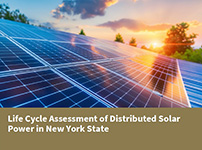
- The Environmental Life Cycle Assessment of Electricity Production in New York State from Distributed Solar Photovoltaic Systems
2021
Key Points
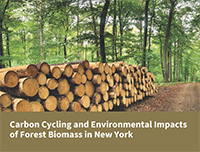
- Good forest management can store nearly as much carbon as untouched forests within 10-20 years
- Poor forest practices like “high grading” reduce carbon storage by over 40% for decades
- Good management of just 33% of NYS forests stores 93% of the carbon compared to if the forests were left untouched.
- Good forest management provides climate benefits and materials for energy and manufacturing.
Importance
This research matters because it shows that good forest management can fight climate change while supporting local economies. By using smart forest management practices, forests can regrow quickly, store carbon, and supply material for wood products and energy. Poor management, however, damages forests and weakens their ability to store carbon and provide wood in the future. With over 687,000 forest landowners in New York, these findings offer a clear path to balance nature and industry for a healthier future.
Summary of research
New York State is home to vast forests that play a crucial role in capturing and storing carbon, helping to fight climate change. These forests cover 63% of the state’s land, and 83% are considered timberland–meaning they are available for responsible wood production. Managing these forests wisely is vital not just for industry and jobs, but also for preserving their ability to clean the air, store carbon, and support ecosystems.
This study examined how different forest management strategies affect carbon storage in forests. Researchers looked at three main approaches: doing nothing (leaving forests untouched), applying “good silviculture” (a science-based way to manage forests by maintaining a healthy age and species mix while producing wood), and “high grading” (a practice that removes only the biggest and most valuable trees, often referred to as take the best and leave the rest).
Using decades of real forest data from hundreds of permanent plots in New York and a computer model that predicts how trees grow, the researchers tested 11 different scenarios. These included combinations of the three main approaches at different times and harvest intervals.
They found that when good silviculture is used, forests regrow and store about 90% of the carbon they had before being harvested—usually within 10 to 20 years. Even more, these well-managed forests continue to provide valuable wood products like timber and paper, some of which store carbon for years or even decades. This means that good management not only maintains the forest’s climate benefits but also supports local industries and jobs.
On the other hand, high grading had much worse outcomes. Forests subjected to this practice only recovered about 60% of their original carbon storage after 25 years. They also couldn’t be harvested again during this time because the trees didn’t regrow rapidly enough. This kind of management harms both the environment and the long-term ability to produce wood, which is essential for local industry.
The researchers also scaled up their findings to look at what happens when part of
the state’s forested landscape is managed using good practices. If only one-third
of the forests are managed with good silviculture, the total carbon storage across
the state remains at 93% of what it would be if all forests were left untouched. This
is significant because it means New York can still produce forest products and address
the state’s climate change goals at the same time.
In addition to examining how much carbon is stored in trees, the study considered what happens to the harvested wood. Wood used in furniture or buildings keep carbon locked away for years. Other parts of the tree can be turned into energy or biofuels, reducing the need for fossil fuels.
Overall, the study shows that managing forests using science-based practices is a win-win. It helps the climate by keeping forests strong and storing carbon, and it supports the economy by providing renewable materials and energy. Poor practices like high grading should be avoided because they harm forests and reduce their ability to recover and provide long-term benefits.
Publication Citation
New York State Energy and Research Development Authority (NYSERDA). 2021 Carbon Cycling and Environmental Impacts from Growing, Harvesting, and Processing Forest Biomass in New York State, NYSERDA Report Number 21-29. Prepared by SUNY College of Environmental Science and Forestry, Syracuse, N.Y.
Authors: Timothy A. Volk, Robert Malmsheimer, Diane Kiernan, Mark Eisenbies, and Rohit Bhonagiri.