Recent Headlines
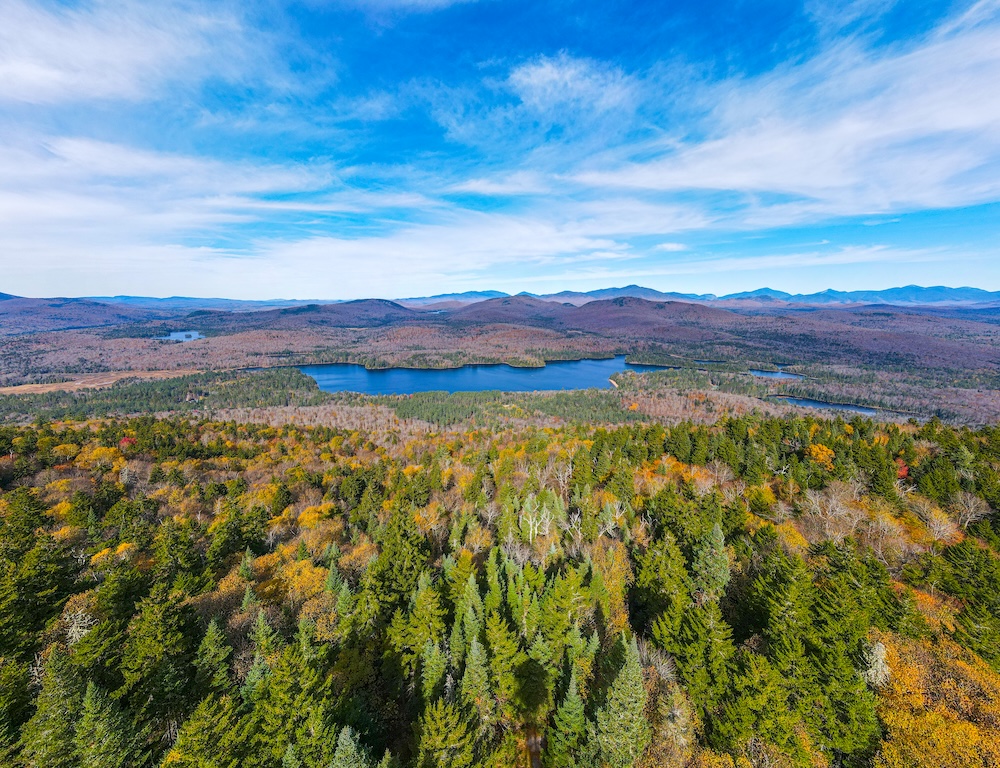
SUNY ESF and DEC Partnership Advances Adirondack Stewardship Through Ecological Scorecard Project
Long-term monitoring effort provides science-based insights into how recreation affects ecosystems across the Adirondack Park
SYRACUSE, N.Y. – Sept. 22, 2026 – The SUNY College of Environmental Science and Forestry (ESF), through its Adirondack Ecological Center, is helping guide the future of recreation and conservation in the Adirondack Park through its innovative Ecological Scorecard Project, a long-term monitoring initiative developed in partnership with the New York State Department of Environmental Conservation (DEC). The project was launched in 2019 to assess how recreation use affects natural resources and ecological conditions across the park over time.
The Ecological Scorecard Project provides land managers, policymakers, and researchers with valuable scientific data to better understand the relationship between recreation and environmental health. By tracking ecological indicators at campsites, lean-tos, trails, and comparison sites, the project supports evidence-based decision-making that balances public access with resource protection.
“The Adirondack Park is one of New York's great natural treasures, and protecting it requires strong partnerships grounded in science,” said ESF President Joanie Mahoney. “We are grateful to the New York State Department of Environmental Conservation for its collaboration and shared commitment to stewardship. Working together, ESF and DEC are generating the long-term ecological data needed to guide informed decision-making and ensure these lands remain healthy, resilient, and accessible for generations to come.”
Since 2020, ESF researchers have collected data from recreation sites throughout the Adirondack Park to establish a long-term record of ecological change. The project examines a wide range of indicators, including vegetation health, forest structure, salamander populations, invasive species, tick abundance, wildlife activity, and water quality. Researchers also use passive acoustic monitoring, standardized photo points, and surveys of invasive plants and forest pests to build a comprehensive picture of ecosystem conditions.
At streams located near recreation areas, scientists conduct macroinvertebrate surveys to evaluate water quality and identify potential environmental impacts. Additional monitoring of vegetation and wildlife helps researchers understand how ecosystems respond to changing patterns of visitation and recreation.
To help the public better understand the initiative, ESF and DEC have developed a video highlighting the project's goals, field methods, and importance for conservation management. The video, “Tracking Change Over Time: The Ecological Scorecard | ESF x DEC," showcases how researchers are using long-term ecological monitoring to inform stewardship decisions throughout the Adirondack Park.
The scorecard framework enables researchers to evaluate ecological conditions across sites and monitor trends over time. Indicators such as healthy salamander populations, sensitive understory vegetation, and high-quality aquatic communities may signal resilient ecosystems, while increases in bare soil, invasive species, or pollutant-tolerant aquatic organisms can help identify areas requiring additional management attention.
As visitation to public lands continues to grow, the need for reliable ecological information has never been greater. The Ecological Scorecard Project helps ensure that management decisions are grounded in science, supporting the long-term health of Adirondack ecosystems while preserving opportunities for people to experience and enjoy the outdoors.
The project exemplifies ESF's mission to advance environmental knowledge and apply science in service of sustainable management of natural resources. Through partnerships, research, and public engagement, ESF continues to develop innovative solutions to complex environmental challenges.
Additional Resources
Video: Tracking Change Over Time: The Ecological Scorecard | ESF x DEC
https://www.youtube.com/watch?v=013DoFfLzA4
The video provides an overview of the Ecological Scorecard Project and demonstrates how researchers from ESF and DEC are monitoring changes in ecological conditions across the Adirondack Park to support science-based management decisions.
About SUNY ESF
The SUNY College of Environmental Science and Forestry is one of the nation's premier colleges focused on the study of the environment, developing renewable technologies, and building a sustainable future. ESF’s mission is to educate future environmental leaders of all backgrounds, advance knowledge, and skills necessary to promote scholarship and stewardship of the natural to designed environments, and act both locally and globally to Improve Our World. ESF’s students, faculty, staff, and alumni make a global impact on improving and sustaining the environment. ESF offers a world-class education among a close-knit community of more than 2,000 scholars with common values and a shared sense of purpose. ESF’s tight-knit community is centered alongside Syracuse University in the heart of Central New York and has a system of properties spanning 25,000 acres that broadly represent New York state’s rich ecological diversity for scientific study and instruction. To learn more, visit suny.edu.