
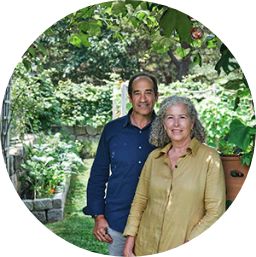
Jesse and Betsy Fink
The Long-Term Impact of Giving: Transforming Philanthropy into Systemic Change
Jesse ’79 and Betsy Fink ’79 are environmental problem solvers. Their foundation — The Betsy and Jesse Fink Family Foundation, whose mission is to “move communities toward a more balanced, sustainable relationship with the environment” — invests in people and organizations like ESF that promote best environmental practices.
As part of the Campaign for SUNY ESF, the Finks have doubled their contributions to The Betsy and Jesse Fink Career Development Program at ESF, which they founded in 2018. They’re also extending their longtime support for the Center for Native Peoples and the Environment as well as the Restoration Science Center. “Our foundation funds and supports environmental organizations and thought leaders across the spectrum. Supporting ESF is really important to us because it’s formed who we are and gave us a foundation for our environmental work,” said Jesse.
The Finks’ support for ESF is part of a giving strategy called systemic investing. It’s a novel approach that seeks long-term solutions to problems by transforming the systems that produced the problems in the first place. That means engaging varied stakeholders throughout the system to produce multifactorial, holistic solutions.
For example, in 2014, the Finks set out to tackle the problem of food waste by breaking down silos and convening policy experts, farmers, and specialists at NGOs and government agencies, creating a roadmap to reducing food waste which ultimately led to the creation of ReFED, the nation’s leading nonprofit dedicated to ending food loss and waste. Other Fink initiatives address biodiversity and habitat loss, including in their community on Martha’s Vineyard, where Molly Jacobson ‘21, pollinator ecologist from ESF’s Restoration Science Center, contributed to data collection and analysis for the MV Pollinator Pathways Project. The project involved planting curated pollinator plots on eight Martha’s Vineyard farms and conducting intensive monitoring to assess pollinator diversity and provide recommendations for farms, landowners, and municipalities to support a broader range of pollinators.
The Finks’ philanthropy weaves together their environmental goals, ESF training, choice of initiatives, and their investment strategies. Jesse and Betsy met at ESF in 1978: Betsy studied environmental and forest biology while Jesse pursued Resource Management. Both went on to pursue graduate work—Betsy at ESF while Jesse pursued his MBA at Syracuse University. They married in 1982 and moved to New York City. Later in his career, Jesse ventured into the world of internet start-ups, co-founding Priceline, where Betsy also held a leadership position. When Jesse and Betsy transitioned from Priceline, they seized the opportunity to dedicate themselves fully to the environmental causes they cared most about.
Jesse is still grateful to ESF for helping launch his career. That gratitude took the form of The Betsy and Jesse Fink Career Development Program at ESF. “The career development team played a big role in getting me my first job at Georgia-Pacific. As a result, I personally want to do everything we can to help students get an internship or fellowship so when they graduate, they’ll have a better chance of getting a job they want,” he said. The program also funds internship-related expenses, such as travel.
Betsy’s undergraduate studies in forest ecology and restoration nurtured a deep commitment to biodiversity and sustainability. This path led to the Finks providing funding for the Restoration Science Center and the Center for Native Peoples and the Environment, whose founding director, Dr. Robin Wall Kimmerer ’75, has had a profound impact on Betsy. “Storytelling is a powerful tool for helping people understand and care about how we use and relate to the natural world – and few have done this more powerfully than Robin, whose work inspires more thoughtful and respectful stewardship of our shared resources,” said Betsy.
Philanthropy is more than giving for the Finks. It’s investing in ways to heal the world. “ESF is a proven institution,” said Jesse. “It's been around for over 100 years. It harvests high-quality students who become incredibly passionate environmental problem solvers. At the end of the day, problems are solved by people, and ESF is a great institution that cultivates wonderful people to do great things.”
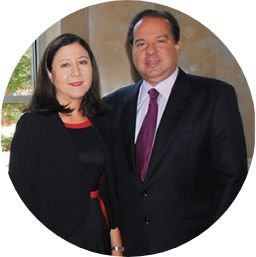
Sam and Carol Nappi
Generations of Care, Years of Discovery: Skaneateles Lake As a Living Lab
A $2 million gift from philanthropists Sam and Carol Nappi, will support expanded research into the cause of harmful algal blooms (HABs) that threaten human health, with an ESF research team using Skaneateles Lake and its watershed as a living laboratory.
Led by Dr. Stephen Shaw, chair of the ESF Department of Environmental Resources Engineering, a team of researchers from across several academic disciplines will spend two years building an extensive data set that can be refined into hypotheses about the nutrient sources in the lake and their connections to HABs. Then, during the next two years, the researchers hope to start testing possible solutions while continuing to do baseline monitoring.
“This gift will allow us to fill in gaps in research that’s been done over the years, and then propose and test some possible solutions,” Shaw said. “The idea is not to study the system indefinitely but to find some solutions. We are looking at phosphorus as a possible contributor to the problem. If, for example, we discover that certain tributaries or features of the landscape tend to have higher phosphorus loads, then we will try to implement some management measures to reduce those loads.”
The funding will support the work of students, including undergraduate and graduate students, and a post-doctoral research assistant in the project. Shaw envisions the development of a new water management course and field experience for ESF students, who would help collect data, evaluate hypotheses and test solutions. Upon graduation, the new alumni would be equipped to take their knowledge to other lakes and help address challenges there.
“This stable source of funding is vital to support the work of students who can do the science to help answer questions and provide solutions to these complex problems,” Shaw said.
Sam and Carol Nappi, formerly of Jamesville, NY, are committed to environmental sustainability and community well-being. Skaneateles Lake and the Finger Lakes region hold deep personal significance to the Nappis, who have long been involved in efforts to maintain quality drinking water from the lake.
“Over 100 years ago my grandfather was involved with the installation of the intake pipes, which serve the City of Syracuse and the surrounding communities”, said Sam Nappi.
Skaneateles Lake and the Finger Lakes region have held deep personal significance to the Nappi family for four generations. It is this appreciation and protection of 200,000 peoples drinking water, which drives their commitment to seeing what can be accomplished beyond government to benefit the long-term health of community and lake.
“We are grateful to everyone involved for their years of collective action to help manage and protect this vital natural resource and look forward to seeing the solutions that come forward from Dr. Shaw’s research. Soon we will announce additional partnerships to expand this work” said Sam and Carol Nappi.
“We have sincere gratitude for this generous contribution,” said ESF President Joanie Mahoney. “Carol and Sam Nappi are making it possible for water research done at ESF to be deployed right here in our Central New York Community for the benefit of everyone.”
“ESF is uniquely positioned to make a difference. Given the recent cuts in federal research funding, Carol and I encourage others to give at a time its needed most” said Nappi.
HABs have been a subject of research at ESF and beyond for decades. They occur when colonies of algae (simple water-dwelling plants) grow out of control and produce toxic or harmful effects on people, domestic animals and wildlife.
Skaneateles is the drinking water source for the city of Syracuse, which is about 20 miles northeast of the lake. Its pristine water and picturesque village attract tourists year-round. Shaw said that while the lake is the initial focus of research, the findings could likely be applied to other lakes that are troubled by HABs.
“I firmly believe that water is New York State's most valuable resource, if we're going to protect our water, we need to actually understand the why and the who and the how of the things that are threatening that water” said Greg Boyer, ESF emeritus professor of biochemistry and director of the Great Lakes Research Consortium at SUNY ESF.
Skaneateles enjoyed many years with no reports of HABs, but Shaw said they started to surface in the last several years. The research team plans to install a series of shallow wells to monitor nutrient export from septic systems, develop a fluorescence sensor for rapid phosphorus quantification and compare various types of remote sensing in monitoring lake algal blooms. The plan also calls for a collaboration phase consisting of a series of meetings and workshops with stakeholders to help shape solutions that will then be tested.
ESF faculty participating in the research with Shaw, a hydrologist, are Dr. Christine Georgakakos, a specialist in water quality with a focus on agricultural systems; and Dr. Bahram Salehi, who specializes in remote sensing with a focus on fusing data from unmanned aerial vehicles with data from satellites. Joining the team is Dr. Silvana Andreescue of Florida International and Clarkson Universities, an expert in developing novel chemical sensors. A panel of experts, including Boyer, a longtime ESF HABs researcher, will convene semi-annually to review new data and continually refine the research to help find effective solutions.
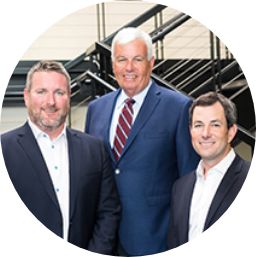
Heuber-Breuer
Hueber-Breuer Commits $250,000 to SUNY ESF’s Historic Capital Campaign
Hueber-Breuer Construction Co., Inc. has pledged $250,000 to the Campaign for ESF. Hueber-Breuer’s donation continues their longstanding partnership with ESF.
The funds will support a range of ESF initiatives, including:
- Unrestricted scholarships
- The Timbuctoo Program, which is committed to increasing awareness, access, and opportunity in environmental fields for high school-aged youth from systemically marginalized communities
- The Construction Management Degree Program
- Conservation efforts on the Onondaga Lake watershed.
Founded in 1872, Hueber-Breuer is a sixth-generation, family-owned firm with a commitment to caring for their clients and the community, safety, quality, integrity, and innovation. Over the decades, the company has earned numerous awards for excellence in construction and historic preservation, and continues to lead in construction management, design-build, and general contracting services across the region.
The donation comes as ESF embarks on its $40 million Campaign for ESF, which aims to expand student access, enhance campus learning environments, and advance critical research.
Speaking at the campaign launch, Andy Breuer, President of Hueber-Breuer and a member of the ESF College Foundation Board, emphasized the importance of investing in ESF’s mission:
“ESF has relevance on both a global and local scale. I know that when we support ESF, we're investing in passionate young people who are engaged in the fight against climate change and other global environmental issues. We’re also investing in a practical, well-equipped workforce — as evidenced by the outstanding ESF graduates who work for Hueber-Breuer. For me, ESF represents legacy, practicality, relevance, problem solving, value, and opportunity.”
Brenda Greenfield, Chief Advancement Officer at ESF, also praised the gift, “We are incredibly grateful to the Breuer Family, and the entire Hueber-Breuer team for their continued support. Hueber-Breuer’s gift exemplifies the spirit of the campaign and the power of community partnerships in shaping a sustainable future.
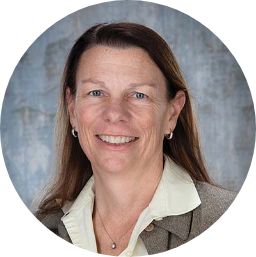
Wendy Marsh
Igniting the Magic
Wendy Marsh believes that ESF students wield the key to making the world a better place. Thatʼs why she created an endowed scholarship for the school and serves on the ESF College Foundation Board.
As Chair of the Environmental and Land Use Planning Department at Hancock Estabrook, a prestigious law firm in Upstate New York, Marsh works with clients to comply with the current environmental laws, obtain approvals for development projects, and educate municipal boards on the requirements for reviewing development projects. She enjoys empowering boards with the knowledge they need to ask difficult questions and fully comprehend the projects that are presented for review.
Marsh was invited to join the ESF College Foundation Board by Hancock Estabrook colleague Marion Hancock Fish, who has been on the ESF College Foundation board for decades. Marsh gladly accepted the position. “I love being on the board. The leadership makes it seamless for us to have a tremendous impact on the ESF students.”
In addition to serving on the board, Marsh established an endowed scholarship for ESF with a focus on students in the Finger Lakes, even though the large sum was a stretch for her. Marsh and her brother were the first in their family to attend college, so she understands the difference a scholarship can make. “I went to SUNY myself. While some studentsʼ parents have the ability to finance a college education, other students do not have that luxury. Student debt can be an issue, and I didnʼt want to see these wonderful scholars in a position to reject jobs they want when they graduate, because of the amount they owe.”
This year, Marsh won a 2023 Feinstone Award for her contributions to ESF and many other organizations. The award honors people across the U.S. for their significant contributions to protecting the environment, and Marsh is typically down to earth about it. “If Iʼm asked to do something, and itʼs the right thing to do, I do it. Then I move on to the next right thing. It feels a little strange being honored for that.”
Doing the right thing is precisely what Marsh admires about the ESF students she meets. “ESF students want to make significant changes to our environment, and theyʼve got the training, the focus, and the fresh perspective to do it. Thatʼs why I am dedicated to supporting them.”
For prospective donors Marsh has two words of advice: unrestricted funding. “A lot of people like funding brick and mortar projects, but unrestricted donations are where things happen. You are able to support putting these brilliant kids in a room with a great professor, and they come up with something that the rest of us canʼt even imagine. Itʼs not tangible—itʼs magic.”