Recent Headlines
- SUNY Chancellor King Presents ESF's First Fall 2027 Acceptance Letter to Local High School Senior at State Fair
- ESF Professor and Department Chair Theresa Selfa Receives Rural Sociological Society's 2026 Excellence in Research Award
- USDA Approval Advances Efforts to Restore the American Chestnut
- ESF Welcomes Largest Graduate Class in College History, Launches New Certificates of Advanced Study
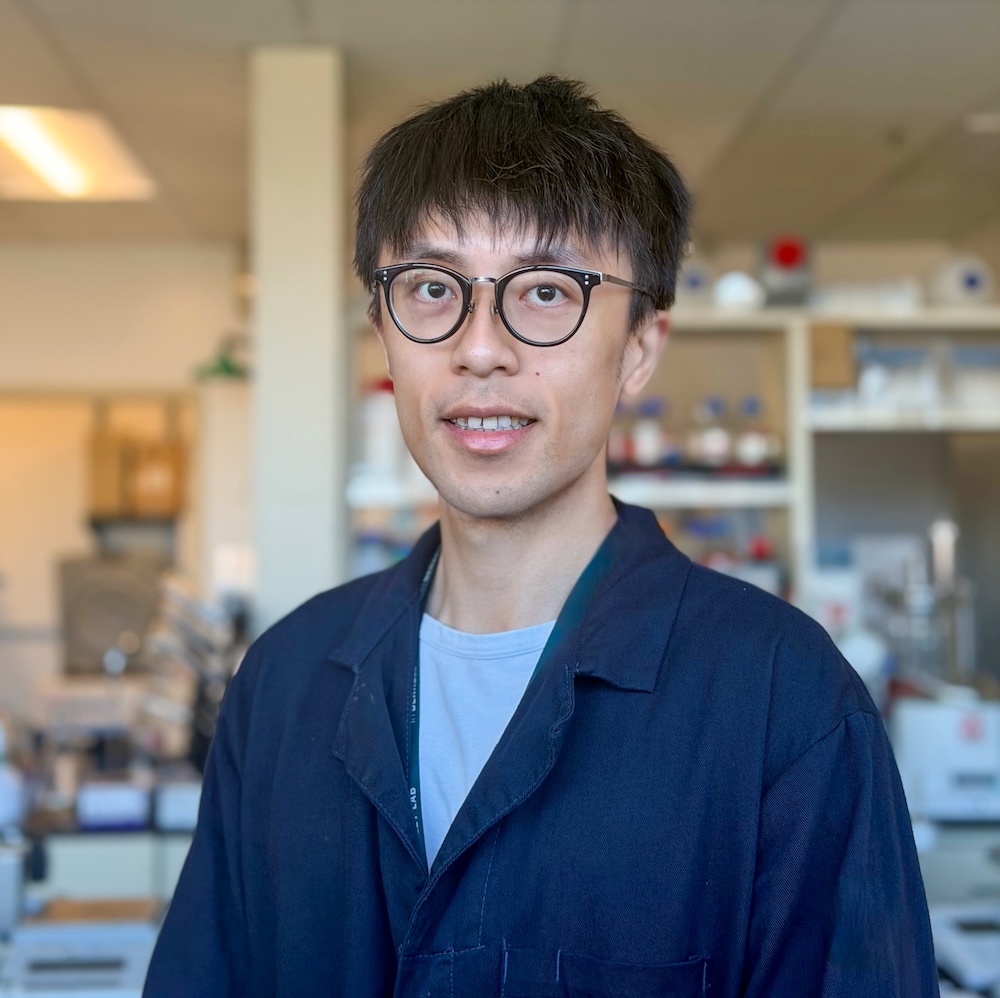
ESF’s Mairui Zhang Receives 2026 Distinguished Ph.D. Dissertation Award
SYRACUSE, N.Y. – MARCH 11, 2026 — SUNY College of Environmental Science and Forestry researcher Dr. Mairui Zhang has been named one of two first‑place winners of the 2026 SUNY Chancellor’s Distinguished Ph.D. Dissertation Award, honored for pioneering work that transforms agricultural and forestry byproducts into sustainable, high‑value materials. The honor celebrates the best Ph.D. dissertations that address critical issues in our society and were authored by the next generation of innovators across the SUNY system.
Zhang’s work, as described in his dissertation “Upcycling of Lignocellulosic Wastes to Value-Added Porous Materials” explores how agricultural and forestry byproducts can be transformed into valuable materials instead of being discarded or burned.
“By understanding the properties and interactions of these natural components, we can design and produce greener fuels, chemicals, and materials that maintain strong performance while reducing environmental impact,” Zhang said.
"The work of our Ph.D. students is what validates our Carnegie R2 ranking, and we couldn't be prouder of Dr. Zhang for this incredible accolade,” said ESF President Joanie Mahoney. “It's not an easy task to wade through the challenges of recycling and upcycling, but Dr. Zhang has done incredible work, and we celebrate him and his invaluable contribution to science."
About the honor, Zhang said, "Receiving the SUNY Chancellor’s Distinguished Ph.D. Dissertation Award is a tremendous honor. Personally, it represents a meaningful milestone that reflects years of dedication and the exceptional mentorship and support I received at SUNY ESF. For my work, it affirms the importance of advancing a circular bioeconomy by transforming biomass byproducts into valuable, sustainable materials. It is encouraging to see my research recognized in this way, and it strengthens my commitment to developing practical, scalable solutions that valorize biomass and reduce reliance on petroleum-based chemicals. This foundation continues to guide my efforts in industry today."
Zhang was one of two people SUNY-wide to receive the award. Jiameng Lai, New York State College of Agriculture and Life Sciences at Cornell, was also honored.
“The annual Distinguished Ph.D. Dissertation Awards exemplify SUNY’s commitment to research and scholarship – one of our four driving pillars. Across SUNY, our Ph.D. students use academic research as a tool to address important issues and make the world a better place,” said SUNY Chancellor John B. King Jr. “This goes to the heart of SUNY’s commitment to academic excellence as a vehicle for meaningful change. Congratulations to Jiameng Lai and Mairui Zhang and all of this year’s remarkable honorees.”
Each dissertation, along with supporting materials, was evaluated by SUNY faculty with expertise in the dissertation field and by a System Administration committee. All honorees will receive a certificate and professional development funds to support their scholarship and research.
Annually, SUNY graduates approximately 1,300 Ph.D. students from its nine doctoral-granting campuses. Across SUNY, PhD students conduct groundbreaking research in fields ranging from engineering to English. Each year, the nine PhD-granting institutions are invited to submit a nomination portfolio for the Chancellor’s Distinguished PhD Dissertation Award.
About SUNY ESF
The SUNY College of Environmental Science and Forestry is dedicated to the study of the environment, developing renewable technologies, and building a sustainable and resilient future through design, policy, and management of the environment and natural resources. Members of the College community share a passion for protecting the health of the planet and a deep commitment to the rigorous application of science to improve the way humans interact with the world. The College offers academic programs ranging from the associate of applied science to the Doctor of Philosophy. ESF students live, study and do research on the main campus in Syracuse, N.Y., and on 25,000 acres of field stations in a variety of ecosystems across the state.